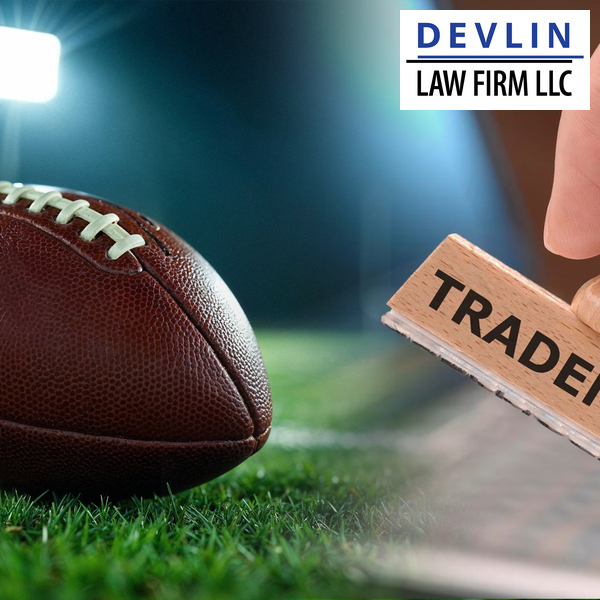
An unofficial holiday is on the horizon in the United States, as the highly anticipated NFL Super Bowl championship game is set to take place on Sunday, February 8, 2026, at Levi’s Stadium in Santa Clara, California. The kickoff is scheduled for 6:30 p.m. ET on NBC. Let’s explore how your business can effectively kickoff its events without a flag on the play.
For small businesses, Super Bowl weekend is one of those rare moments when consumer attention concentrates, and spending follows. For weeks leading up to the game, major retailers run promotions on televisions, audio equipment, home furnishings, and party-ready food. Local businesses often see the same surge in demand for watch-party catering, extended hours, special menus, venue-adjacent hospitality services, themed promotions, and last-minute convenience purchases. The opportunity is real, but it comes with a common marketing trap: leaning too hard on NFL branding in a way that implies affiliation.
SUPER BOWL is a famous, incontestable trademark in the United States, and the NFL tightly manages the ecosystem around it, including official ticketing, licensed travel and hospitality packages, and sanctioned events. Compounding that, NFL Properties LLC and related entities maintain extensive trademark coverage for SUPER BOWL across multiple classes and jurisdictions, with U.S. federal registrations supplemented by state and international filings that reach well beyond entertainment into categories commonly implicated by small-business promotions, including apparel, printed materials, toys and sporting goods, electronics and media, advertising and sponsorship services, beverages, and other ancillary goods and services. From an enforcement perspective, the risk for small businesses is that simply adding generic words like concierge, rooms, or parties to “Super Bowl” often does not avoid confusion when those terms are used to promote services that overlap with what consumers expect the NFL and its licensees to offer, and the use of NFL logos, Super Bowl event marks, or official wording can be treated as intentional targeting.
In that same vein, domain names and handles are likewise a recurring source of conflict. When a promotion embeds “superbowl” into a domain or subdomain, the mark becomes the first thing a consumer sees, and the address itself can function like branding. That posture is difficult to defend when the site is advertising services that overlap with the NFL’s licensed ecosystem or that consumers reasonably associate with official channels.
The practical solution is not complicated, but it requires discipline: make your business the unmistakable source of the offer, and treat the event reference as contextual, not brand-defining. In plain terms, your name should lead, your look-and-feel should be yours, and your copy should read like a promotion hosted by your company for your customers, rather than something connected to the league.
This starts with presentation. If the headline, page header, or primary creative emphasis is “Super Bowl” instead of your brand, you are borrowing the NFL’s goodwill as the primary attention device. It also means your creative should be scrubbed of NFL indicia. Avoid the Super Bowl logos, the NFL shield, team names, team logos, team imagery, uniforms, helmets, and anything that looks like official trade dress. You should also avoid using player likeness, but that is a separate discussion. Small businesses sometimes underestimate how quickly a color scheme, a helmet silhouette, or an official-looking layout changes the audience’s interpretation from local promotion to an authorized event..
Language choices matter just as much. Words that suggest sponsorship or authorization, such as official, hosted, sanctioned, approved, authorized, or similar phrasing, tend to be outcome-determinative because they communicate affiliation even if you never say NFL explicitly. Once that implication is in the headline or the hero text, it is very hard to walk back.
If you need to reference the game, do so in a narrow, factual way that simply situates timing and context. A restrained reference is often defensible as informational, particularly when it does not dominate the branding and it does not carry official cues. This is where many businesses can safely operate: describing the weekend, the timing, the location, and what you are offering, while remaining visibly brand-forward. If tickets are involved in any way, clarity is essential. If you are not an official seller, say so. If tickets are secondary-market, describe them that way. The goal is to prevent the consumer from inferring a relationship that does not exist.
Disclaimers can help reduce ambiguity, but they should be treated as support, not as a fix. In practice, decision-makers often discount disclaimers when the overall layout and messaging still suggest affiliation. A footer line will not rescue a presentation that uses official-sounding language, relies on NFL imagery, or makes the famous mark the primary identifier. A disclaimer is most useful when everything else about the promotion already reads as brand-led and local, and the disclaimer simply confirms what the consumer is already likely to understand.
To make this concrete, consider the difference between two promotional styles. A lower-risk approach would lead with your brand and describe the offer in ordinary business language, such as a headline like “YYZ’s Big Game-Weekend Lodging” or “XYZ’s Watch-Party Packages Sunday Night’s Big Game,” followed by copy that explains what you provide and includes a brief non-affiliation statement. This format keeps the event reference in the role it should play: context.
A higher-risk approach flips the hierarchy. For instance, statements like, “Official Super Bowl Parties and VIP Packages,” combined with any NFL logos, the NFL shield, team imagery, or official-sounding language, read like a sanctioned offering and invite enforcement. Moreover, when the domain itself leans into the mark, such as superbowl-rooms.com, it further reinforces the impression that the offer is tied to the NFL rather than a local business.
The business takeaway is straightforward. You do not have to sit out the commercial upside of the weeks, days, or weekend leading up to the NFL’s Super Bowl championship game, but you do need to market it like a promotion offered by your company, not a product of the NFL’s brand system. Brand-forward design, clean language, and factual references do most of the work. If a campaign is large, ticket-adjacent, travel-adjacent, or likely to attract attention beyond a local footprint, it is worth getting a quick legal review before you publish, because small choices in headings, domains, and creative can materially change the risk profile.
Disclaimer: The information provided in this article is for general informational purposes only and should not be construed as legal advice. Every situation is unique, and the law may apply differently depending on specific facts and circumstances. This article does not create an attorney-client relationship between you and Devlin Law Firm LLC. If you have questions about how these developments may affect your intellectual property rights, please contact a qualified attorney
Contact:
Robyn T. Williams is a partner at Devlin Law Firm and Co-chair of the Trademark Practice Group. Please contact Robyn T. Williams via the Devlin Law Firm site to schedule a consultation regarding any of your big game promotions.
correspondence@devlinlawfirm.com
Devlin Law Firm
>> Learn More about Devlin Law Firm Copyright Litigation and Prosecution